2026-11-03
Check Your Nipple Position Once: Sagging Breasts or Deflated Breasts?
Many people assume their breasts are sagging, but a nipple position check often reveals deflated breasts instead. Learn the three stages and how each is treated.
Many people come in for a breast sagging consultation, convinced their breasts have dropped.
When we check the nipple position, however, the breast often isn't sagging at all. Instead, the upper part of the breast looks empty, which is a deflated breast in many cases.
On the other hand, some people who thought it was "just a little droop" have already progressed to the point where a lift is needed.
The key issue is that the surgical methods for these two conditions are completely different.
Is your breast sagging, or is it deflated?
Here are the criteria you can check at home in just 30 seconds.
1. Breast sagging self-check: what should you look at?
The key measure for judging sagging is the relationship between the nipple position and the inframammary fold.
The inframammary fold is the natural crease where the breast meets the chest wall beneath it. You can find it by standing upright in front of a mirror and looking at the crease under your breast.
Next, compare where your nipple sits relative to this fold.
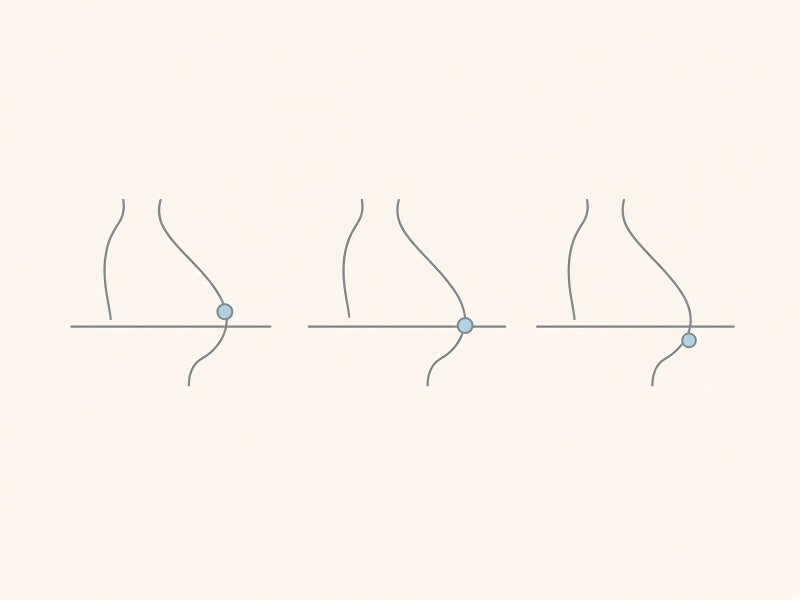
Stage 1: The nipple sits clearly above the fold
This is not sagging but a deflated breast.
Volume in the upper breast has been lost, which can make the breast look like it's drooping. At this stage, rather than a lift, simply filling the volume with an implant can give you the look of a lifted breast.
Stage 2: The nipple has descended to roughly the same level as the fold
This is the early stage of mild sagging.
Stage 3: The nipple sits 1–3 cm or more below the fold
Filling in volume alone has its limits, so a breast lift (mastopexy) that raises the breast is also considered at this stage.
Take a look in front of a mirror. Many people see a result that is different from what they expected.
2. How does the surgical approach differ by sagging stage?
With a deflated breast, filling the empty space with an implant lets the breast fill out again, creating a naturally lifted look. This carries the least scarring burden.
What about mild sagging? When the nipple only needs a slight repositioning, the incision follows the border of the areola. The scar is hidden along the edge of the areola, so it becomes relatively inconspicuous over time.
If the nipple needs to be moved clearly upward, an incision may be required that adds a vertical line below the areola or extends down to the inframammary fold. This leaves more visible scarring, but it also allows for a larger change in shape.
There is one important point here. Choosing a small incision simply because you don't want a scar, as in "Please do the small incision because I don't want scars," is not always the right choice.
If you choose a lighter procedure than your level of sagging calls for, the results may not be sufficient. Conversely, a large incision for mild sagging will leave unnecessary scarring.
In short, the most important thing is to precisely match the method to your condition.
3. How can you slow breast sagging through daily habits?
There are four lifestyle habits that help slow breast sagging.
First, avoid crash dieting. Losing 5–6 kg a month is the worst thing for your breasts, because the skin's ability to contract cannot keep up with how quickly the weight comes off.
Recently, we have seen a sharp rise in sagging concerns among people who repeatedly lose weight quickly with diet injections and then regain it. Losing about 1–2 kg a month at a steady pace is better for the breasts and for the body's overall shape.
Second, wear a supportive sports bra when exercising. Activities like running, where the breasts bounce up and down, require a bra with strong support. Repeated bouncing places cumulative strain on the tissues that hold the breast up.
Women with naturally large breasts and those who have had implant surgery should be especially careful.
Third, use a sleep bra. People who sleep on their side can spend 6–8 hours a day with the breast pressed or pulled to one side. A light sleep bra can help reduce this strain. If you wear one, choose a gentle level of support.
When it comes to breast sagging and nipple position, remember these two points.
First, if your nipple sits clearly above the fold, you may have a deflated breast rather than sagging.
Second, the surgical method is determined by your sagging stage, not by the size of the scar.
What to check before surgery
1) Whether the clinic actually measures the positions of your nipple and the fold, and explains which sagging stage you are in
2) Whether it explains the difference between a low-scar method and a method with more reliable results, without hiding anything
3) Whether it explains the reason when the incision you want does not match your stage
A plastic surgeon who focuses on breast procedures should be able to explain whether a lift is necessary based on measured nipple position.
This post is written to provide accurate medical information and complies with Article 56 of the Korean Medical Service Act.
All procedures and surgeries can cause side effects, large or small, depending on the individual. Please consult thoroughly with your medical team and make a careful decision.
Frequently Asked Questions
Can I tell at home whether my breasts are sagging or deflated?
Yes. Stand upright in front of a mirror and compare the position of your nipple with the inframammary fold. If the nipple sits clearly above the fold, you may have a deflated breast from upper-pole volume loss rather than sagging.
How are the stages of breast sagging divided by nipple position?
If the nipple sits clearly above the fold, it is a deflated breast. If it is roughly level with the fold, it is the early stage of mild sagging. If it sits 1–3 cm or more below the fold, a breast lift should be considered. These are self-check criteria for distinguishing stages, and the final judgment should be made through measurement and consultation with a medical professional.
Do breast sagging procedures differ by stage?
Yes, the procedure changes with the sagging stage. A deflated breast is treated by filling the empty space with an implant, and mild sagging is treated with an incision that follows the areola border. When the nipple needs to be moved clearly upward, an incision that adds a vertical line below the areola or extends to the inframammary fold may be necessary.
Should I just choose the surgery with the smallest scar?
No. Matching the method to your sagging stage matters more than the size of the scar. Choosing a lighter procedure than your condition requires may not produce sufficient results, while a large incision for mild sagging can leave unnecessary scarring.
What lifestyle habits can help slow breast sagging?
Recommended habits include avoiding crash dieting, wearing a sports bra during exercise, and using a sleep bra. Losing 5–6 kg a month is the worst for the breasts, while losing about 1–2 kg a month gradually is better for the breasts and the body's overall shape.
What should I check before surgery?
Confirm that the clinic measures the positions of your nipple and the inframammary fold and explains your sagging stage. Also check whether it openly explains the difference between low-scar methods and methods with more reliable results, and whether it gives a clear reason when the incision you want does not suit your stage.