2026-10-28
Breast Augmentation Myths: Visibility, 10-Year Replacement, Breastfeeding, Size, and Massage
Five common breast augmentation myths, from visible implants and 10-year replacement to breastfeeding, size, and post-op massage, checked against current medical guidance.

There are breast augmentation myths I correct again and again in consultations. For people considering breast surgery, the hardest part is often not the surgery itself, but not knowing which information is accurate. Search results contradict each other, and what friends say is often different again. Here are the five myths I’ll cover today:
“Breasts after augmentation always look obviously done.”
“Implants must be replaced every 10 years.”
“Breast augmentation makes breastfeeding difficult.”
“If you’re going to do it, you should always go as big as possible.”
“You must massage your breasts after surgery.”
To cut to the chase, most of these are outdated beliefs that no longer hold up today.
The breast surgery facts you may have picked up: are they still true? Let’s take them one at a time.
1. Do augmented breasts always look obviously done?
“I don’t want breasts that look like upside-down bowls.”
This is a concern I hear often. The short answer is that it depends on how the surgery is performed.
In the past, the range of implant types was limited and larger sizes were popular, so it is true that some results looked unnatural. In particular, textured implants with a rough surface tended to adhere to the surrounding tissue and move less, which often produced the upside-down bowl look.
Today, smooth implants and microtextured implants, which move more naturally, have greatly reduced this concern.
Even so, the biggest factors in whether surgery shows are the patient’s own skin elasticity and tissue thickness.
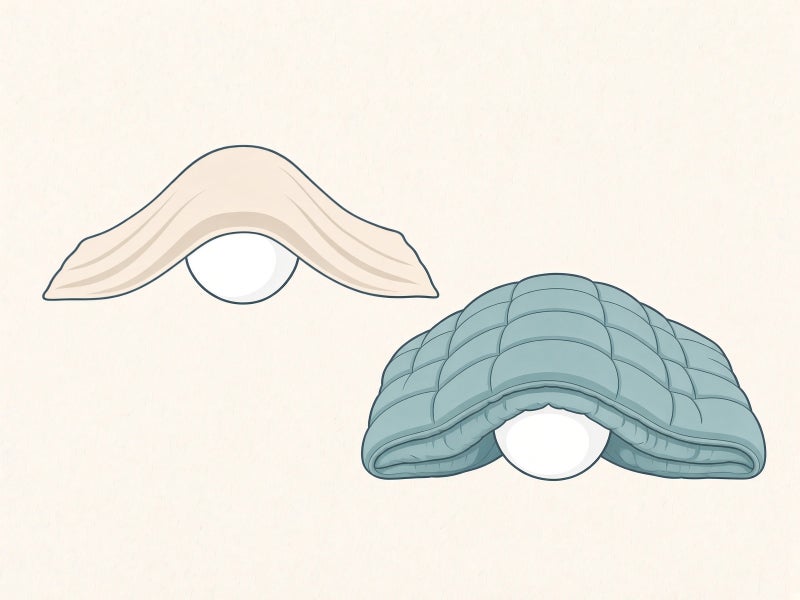
If you already have a good amount of natural breast tissue, it works like a thicker blanket over the implant, so the result is more likely to look natural. The reason we sometimes recommend combining implants with fat grafting for patients who are slim or have thin tissue is to make up for that lack of coverage.
2. Do breast implants need to be replaced every 10 years?
If there are no particular problems, there is no need to replace implants based on time alone.
This belief appears to come from a distorted understanding of the saline and early silicone implant era, as well as the 10-year follow-up period of the U.S. CORE Study.
That said, implants are not lifetime devices, so regular check-ups are necessary. For silicone gel implants, the U.S. FDA recommends an initial ultrasound or MRI 5 to 6 years after surgery, even without symptoms, followed by screening every 2 to 3 years.
Replacement decisions are based not on time, but on rupture, capsular contracture (hardening caused by thickening of the scar capsule around the implant), and patient satisfaction.
For more details, you may want to read our earlier post, “Where the 10-Year Replacement Rule Came From: A Guide to When to Replace Implants.”
3. Does breast augmentation make breastfeeding difficult?
Having implants rarely prevents someone from breastfeeding, because the implant is placed beneath the milk-producing glandular tissue, not inside it.
In dual-plane surgery, the pectoralis major muscle covers the upper part of the implant, separating the glandular tissue from the implant. When dissection is performed under endoscopic visualization, the pectoralis major fascia can also be preserved on the lower part, creating an additional layer of separation between the implant and the glandular tissue.
That said, when multiple studies are pooled, some report a slightly lower rate of exclusive breastfeeding among women with implants. However, the number of studies is still limited, and it is not clear whether the implants themselves are the cause. If you plan to breastfeed, please let your surgeon know during the consultation.
Some of you may have grown concerned after seeing the news. It refers to a case officially reported by the Ministry of Food and Drug Safety (MFDS) in January 2017 as Korea’s first such case, in which silicone was detected in breast milk.
So how should this case be understood? It was an extremely rare case in which silicone leaked from a ruptured implant and passed out through the milk ducts. If an implant remains intact without rupture, the likelihood of silicone entering breast milk is low.
4. If you’re going to do it, should you always go bigger?
I try to match the size patients want as closely as possible, because the purpose of breast augmentation is, after all, to increase size.
However, if the implant would extend beyond the chest wall or the skin is too thin to properly cover it, I will honestly recommend choosing a slightly smaller size.
Recently, more people are choosing not to simply go as big as possible, but instead opting for a modest implant in the low-to-mid 200cc range to achieve a natural “just one cup size” increase. Many people past their late twenties want to fill in a sunken upper chest.
If the upper chest has enough tissue, the implant can be placed above the muscle, which offers advantages in terms of pain and recovery. Conversely, if the tissue is thin, the implant’s outline may show through, so placement under the muscle may be more suitable.
5. Do you absolutely need to massage your breasts after surgery?
Massage that forcefully presses on the implant to tear the capsule is contraindicated.
The massage I’m referring to here is not the kind used to relieve tight muscles. It is closer to deliberately tearing the scar capsule that forms around the implant by pressing hard on it.
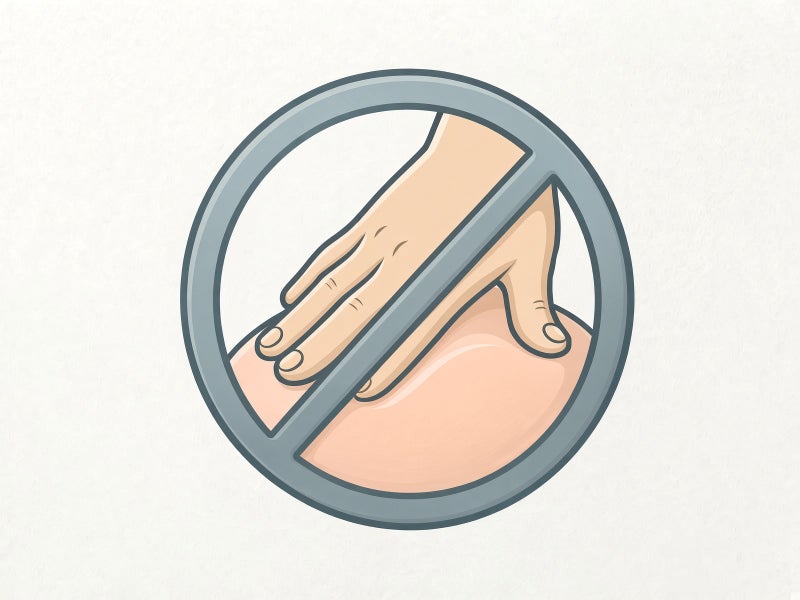
This kind of massage was commonly practiced when capsular contracture was frequent and dissection was done by feel without endoscopes. However, because it carries a risk of implant rupture, it is no longer recommended.
That said, some people’s bodies form a capsule that is tougher than average. In such cases, we provide gentle care, such as slightly moving the implant to help with its feel and movement. This is a completely different concept from massage that presses hard enough to tear the capsule.
Breast augmentation myths: remember these two points
First, many of the breast surgery facts commonly heard are outdated and no longer apply today.
Second, whether the results look natural and how much size you can achieve depends on your own skin elasticity, tissue thickness, and chest wall structure.
What to check before surgery
1) Whether they honestly explain the likelihood of visible results based on your skin elasticity and tissue thickness
2) If you plan to breastfeed, whether they explain the incision site and implant placement with that in mind
3) Whether they instruct you to massage after surgery, and if so, what method they use
A plastic surgeon who specializes in breast procedures should be able to explain, with evidence, why outdated information circulating online no longer applies today.
This post was written to provide accurate medical information and complies with Article 56 of the Medical Service Act.
All procedures and surgeries carry the risk of side effects of varying severity depending on the individual. Please consult thoroughly with your medical team and make a careful decision.