2026-10-08
Balloon Tissue-Preserving Breast Augmentation: Conditions and Limitations Revealed by the Paper
A look at a 2026 study of 330 balloon tissue-preserving breast augmentations, covering candidate criteria, manufacturer ties, and the method's limits.
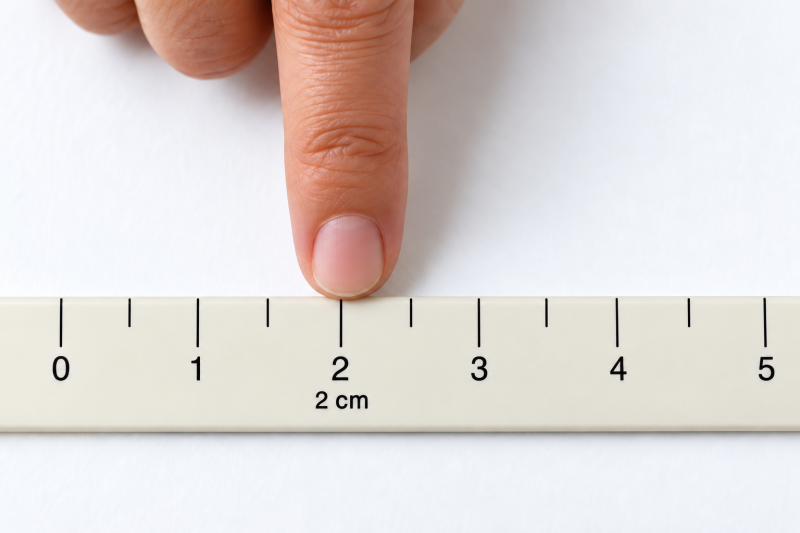
Breast augmentation that uses an inflated balloon to create space for the implant
is mainly known for small incisions and quick recovery.
However, a 2026 paper in an American aesthetic surgery journal
shows that this method assumes sufficient breast tissue and an implant that is not large.
The authors also noted that if the balloon is not held in place by hand,
implant malposition can occur.

What surgery does this paper cover?
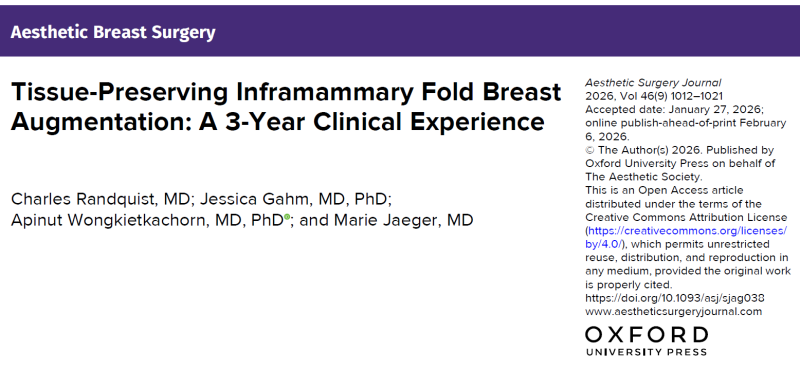
This paper reviews 330 primary (first-time) breast augmentations
performed by four plastic surgeons from Sweden and Thailand[1].
The technique involves making a 2.5–3.5 cm incision along the inframammary fold and injecting fluid to separate the tissue layers,
then inserting a balloon through a narrow passage and inflating it with air to create space.
The implant is placed above the fascia, the thin membrane covering the chest muscle,
and below the glandular tissue.
The authors call this technique 'tissue-preserving' breast augmentation
because it disturbs the ligaments that support the breast less.
Preserving tissue is a basic principle not only of breast surgery
but of all surgery.
But is the balloon-based preservation method the only way to uphold that principle best?
Who wrote the paper?
The corresponding author, Charles Randquist,
is an internationally renowned plastic surgeon who runs Victoriakliniken in Stockholm, Sweden.
The International Society of Aesthetic Plastic Surgery (ISAPS) introduces him
as an internationally recognized breast aesthetic surgeon and a pioneer of tissue-preserving breast augmentation,
and lists him as a mentor in the society's international fellowship program[2].
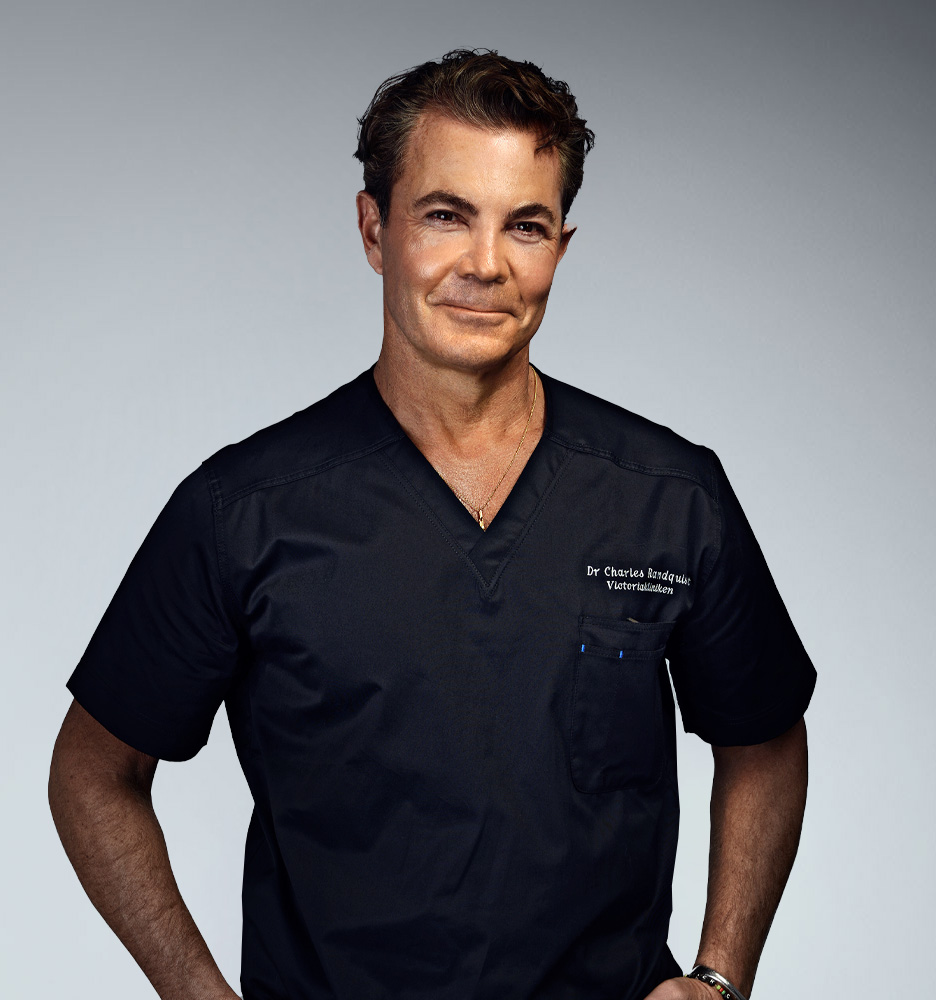
According to the paper, he has been performing breast augmentation since 1996,
and after seeing cases of implants dropping downward or outward in 2018,
he changed his implant and patient selection criteria, which led to his current approach[1].
He has also said that he helped develop a breast augmentation method
that uses a small axillary (armpit) incision and is performed without general anesthesia.
Results from a skilled surgeon who has personally developed and refined the technique
are not guaranteed to be reproduced by other surgeons.
Seungbum Han, wearing a name badge, stands beside a man in a blue suit at an event.
What is the relationship between the authors and the manufacturer?
The balloon, the instrument used to create the passage,
and the implants used in this paper are all products of Establishment Labs, the company that manufactures Motiva implants[1].
According to the conflict-of-interest disclosure at the end of the paper, Dr. Randquist serves as a medical consultant to this company,
is the principal investigator of the U.S. clinical trial for the Motiva implant,
and receives royalties related to the company's small-incision axillary breast augmentation program (Mia Femtech)[1].

Co-author Marie Jaeger is also a medical consultant to the same company
and an investigator in the same clinical trial[1].
Having a conflict of interest with the manufacturer does not mean the results are wrong.
However, because this study was conducted by surgeons closely connected to the company that made the instrument and implants, and evaluates surgeries performed with that instrument,
conclusions should be approached with caution until the same results are confirmed by independent research.
Does the balloon only inflate in the direction you want?
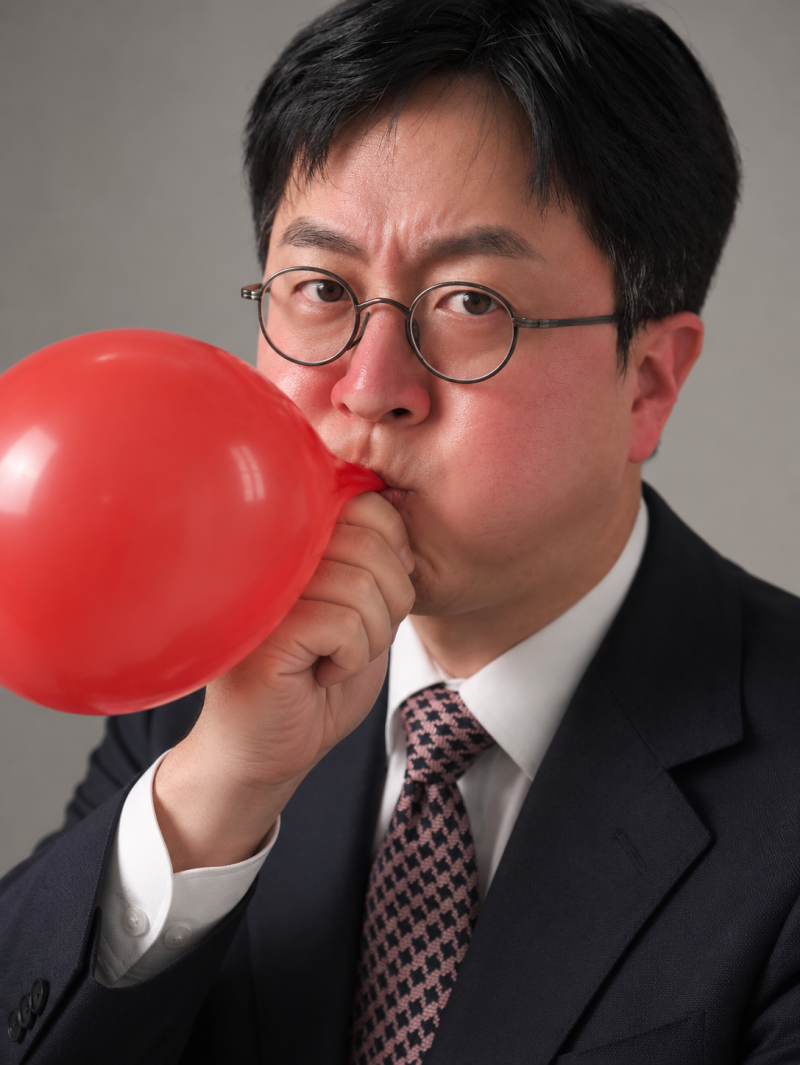
A balloon inflates toward the path of least resistance.
The authors acknowledge this and write that the surgeon should hold one hand on the outside of the breast
and the other on the balloon handle, keeping the balloon fixed at the center behind the nipple[1].
Without adequate control, the space can expand excessively outward,
or the implant can end up sitting too high.
In this study, two patients in whom one implant had moved too high underwent corrective surgery.
A tough fibrous band remains on the inner lower part of the breast,
so the authors further widened that area by pushing with their fingers[1].
The process of widening the space with the balloon and fingers is not done under direct vision.
How is bleeding controlled?
In this method, bleeding is reduced using the pressure of the balloon and gauze soaked in a vasoconstrictor (epinephrine),
and bleeding is checked visually at the end[1].
No hematoma around the implant was reported in this study.
However, the effect of vasoconstrictor drugs wears off over time.
In my personal view, the basic way to reduce hematoma is to dissect while directly watching the surgical site and to control bleeding vessel by vessel.
Who does the paper say it suits?
The paper considers patients with an intact internal breast support structure
and sufficient skin and fat to be suitable candidates[1].
Those whose upper breast tissue measures less than 2 cm when pinched should be careful
Patients who have lost a significant amount of weight or have severe stretch marks were classified as unsuitable.
The average implant volume was 300 cc, and the implant width was limited to at least 1 cm narrower than the original breast width.
Midway through the study, the upper tissue threshold was lowered to 1 cm,
but after rippling (visible wrinkling of the implant) occurred in three patients,
it was raised back to 2 cm.
If you have a slim build or want a large size,
first check whether you meet these criteria.
What does the 0.9% complication rate mean?
The 0.9% is a value measured under this study's conditions for the complication categories defined by the authors.
This is a retrospective study with no control group comparing it to other surgical methods,
and its level of evidence is Level 4, a case series, which is relatively low.
The average follow-up was 18 months,
which is too short to judge capsular contracture or implant sagging that appear over time.
The three cases of rippling were not included in the total complication count.
The authors themselves acknowledged that after adopting this method, complications
did not decrease in a statistically significant way[1].
[Questions to Ask Before Surgery]
Whether the surgeon directly watches the inside while widening the space
How bleeding is controlled
How many centimeters my upper breast tissue measures
Whether my desired implant size and width fall within this method's range
How malposition is corrected if it occurs
A plastic surgeon who focuses on breast surgery should be able to explain the limitations of a method as well as its advantage of a 'small incision.'
Sources
[1] Randquist C, Gahm J, Wongkietkachorn A, Jaeger M. Tissue-Preserving Inframammary Fold Breast Augmentation: A 3-Year Clinical Experience. Aesthetic Surgery Journal. 2026;46(9):1012–1021. doi:10.1093/asj/sjag038
[2] ISAPS Fellowship Program — Stockholm, Sweden (Victoriakliniken profile). https://www.isaps.org/education/residents-program/isaps-fellowship-program/stockholm-sweden/
Frequently Asked Questions
What is balloon tissue-preserving breast augmentation?
This is a breast augmentation that uses an inflated balloon to create space for the implant and is known for small incisions and quick recovery. A 2.5–3.5 cm incision is made along the inframammary fold, fluid is used to separate the tissue layers, and a balloon is inserted through a narrow passage and inflated with air to create space. The implant is placed above the fascia and below the glandular tissue.
Who does the paper say this method is suitable for?
The paper considers patients with an intact internal breast support structure and sufficient skin and fat to be suitable candidates. Those whose upper breast tissue measures less than 2 cm when pinched should be careful, and patients who have lost a significant amount of weight or have severe stretch marks were classified as unsuitable.
Can the balloon be made to inflate only in the desired direction?
No. A balloon inflates toward the path of least resistance, so the paper explains that the surgeon must hold its position by hand. Without adequate control, the space can expand excessively outward or the implant can end up sitting too high. In this study, two patients in whom one implant had moved too high underwent corrective surgery.
How is bleeding reduced during surgery?
Bleeding is reduced using the pressure of the balloon and gauze soaked in a vasoconstrictor (epinephrine), and bleeding is checked visually at the end. No hematoma around the implant was reported in this study. However, the effect of vasoconstrictor drugs wears off over time.
What does the paper's 0.9% complication rate mean?
The 0.9% is a value measured under this study's conditions for the complication categories defined by the authors. Because this was a retrospective study without a control group and the average follow-up was only 18 months, it is too short to judge capsular contracture or implant sagging that develops over time. The level of evidence is Level 4, a relatively low tier.
What is the relationship between the paper's authors and the manufacturer?
The corresponding author, Dr. Randquist, serves as a medical consultant to the manufacturer of the instrument and implants used in the paper. According to the conflict-of-interest disclosure, he also receives royalties related to the company's small-incision breast augmentation program. A conflict of interest does not mean the results are wrong, but conclusions should be approached with caution until the same results are confirmed by independent research.