2026-10-12
Female Inverted Nipple Surgery: Top 3 Questions Answered [Q&A]
Answers to the three most common questions about inverted nipple surgery: breastfeeding after correction, recurrence risk, and what to check for adult-onset inversion.

A concern you can’t easily share with anyone, one you silently agonize over alone: ‘inverted nipples.’

In fact, this condition is not a rare worry you face alone. According to statistics, more than 3.2% of women in Korea have inverted nipples, and over 86% of those cases occur in both breasts.
It goes beyond the cosmetic stress of feeling reluctant to go to public baths. Hygiene problems caused by discharge buildup, along with worries about breastfeeding in the future, pile up, and many ultimately decide to have surgery.
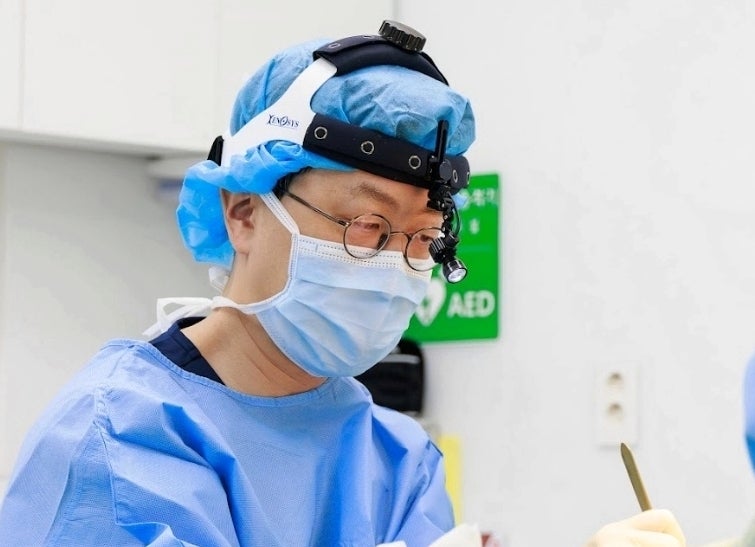
A surgeon in a surgical cap, mask and magnifying loupes with a headlight during an operation.
But when you start looking into correction, fear tends to get the better of you.
“Will I still be able to breastfeed?”
“What if it sinks back in later on?”
Rather than relying solely on the simple cost comparisons and reviews flooding the internet, what matters most is accurately understanding the anatomy of your own breasts.
Today, we’ll address the three questions patients ask most often during consultations to help clear up your concerns.
Q1. Is breastfeeding still possible after surgery?
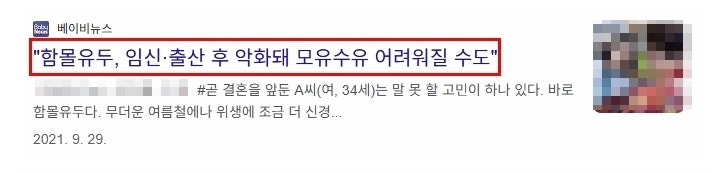
To answer directly, it depends on the surgical method you choose.
Inverted nipple surgery is broadly divided into two types.
1) ‘Duct-preserving surgery,’ which keeps the milk ducts (lactiferous ducts) intact
2) ‘Duct-cutting surgery,’ which separates the milk ducts
If you’re planning to get pregnant and give birth in the future, the duct-preserving technique is considered first. It keeps the ducts undamaged while bringing the nipple outward, so breastfeeding function is not lost.
But what if the inversion is severe, or the shortened ducts are pulling the nipple strongly inward and putting it at high risk of recurrence? In such cases, the ducts may have to be cut (separated), and breastfeeding function will inevitably be limited.
That’s why, during your consultation, it is most important to clearly share your future pregnancy and breastfeeding plans with your medical team, so that a customized one-on-one surgical plan can be designed for you.
Q2. Once corrected, won’t it recur?
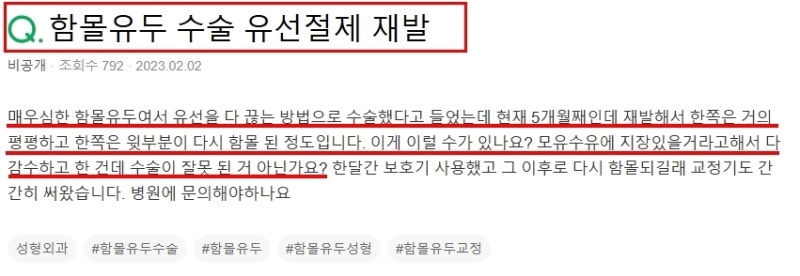
Recurrence rates also vary significantly depending on the current degree of inversion and the surgical method.
As mentioned earlier, the duct-preserving technique has the advantage of allowing breastfeeding. However, because the existing duct tissue retains a rubber-band-like tendency to pull the nipple back to its original position, there is a relatively higher risk of recurrence.
On the other hand, if you choose a method that carefully releases the internal fibrous tissue pulling the nipple inward and adds a supporting structure, the recurrence rate drops significantly.
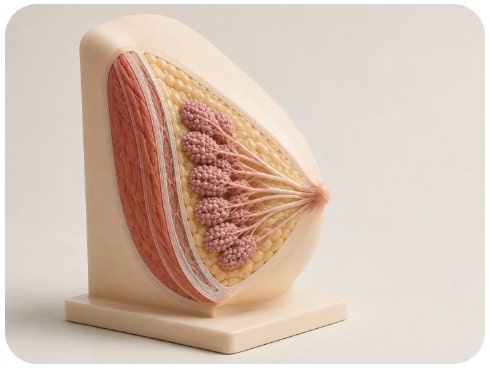
Especially if you’ve already experienced a recurrence or the inversion is severe... simply pulling the nipple out from the outside and tying it with sutures is not enough. In such cases, a more advanced technique is needed: transplanting autologous tissue or allograft dermis into the empty space inside the nipple to create a sturdy support structure. This is what prevents re-inversion.
That is exactly why you should seek out a highly skilled specialist with deep anatomical knowledge, rather than choosing a low-priced promotional deal.
Q3. I suddenly developed an inverted nipple after becoming an adult. Can I go ahead with surgery right away?

Rather than rushing into cosmetic surgery, identifying the cause through differential diagnosis always comes first.
Inverted nipples are usually congenital, forming during puberty when the milk ducts fail to grow properly. But what if, one day out of nowhere, a nipple that was perfectly normal in adulthood suddenly turns inward? That is not something to brush off lightly.
It may be a clear warning sign from your body: an inflammatory condition such as breast cancer or mastitis, or a tumor forming inside the breast, could be pulling the nipple inward with its lesion tissue.
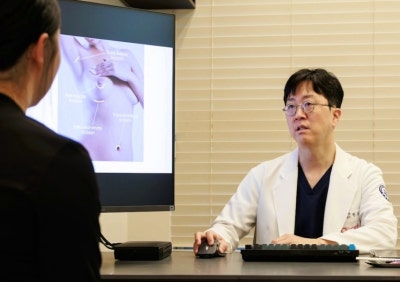
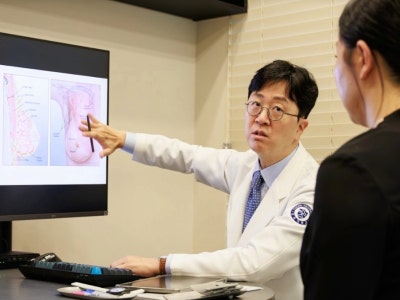
Therefore, acquired inverted nipples should never be corrected by simply pulling the nipple out for appearance’s sake. It is essential to undergo a thorough examination, such as ultrasound, to rule out any other lesions in the breast. Only after confirming there are no health concerns should cosmetic correction be carried out safely.
So far, we’ve looked into the three questions people most want answered before inverted nipple surgery:
1) Whether breastfeeding is possible
2) How to prevent recurrence
3) Precautions for acquired inversion
We have looked into each of these above.

Inverted nipple correction is not a minor procedure that simply pulls the sunken area outward. It involves the complex anatomy of the breast and the function of the milk ducts, so both aesthetic appearance and functional preservation must be considered at the same time. It is a highly delicate surgery.
Rather than being swayed by a low price alone, we encourage you to have your condition accurately diagnosed by a specialist who deeply understands the internal structure of the breast, starting with an ultrasound exam before surgery.
We hope you can set aside the concern you’ve been hiding for so long and reclaim a confident, healthy everyday life. We’re rooting for you.
<Related Articles You May Find Helpful>
Amora Taps Plastic Surgery Clinic |
Main Phone: 02-522-0955 28, Seorodaero 78-gil, Seocho-gu, Seoul Square Cube, 3rd Floor |
This post has been written directly by Amora Taps Plastic Surgery Clinic for the purpose of providing accurate medical information, in compliance with Article 56 of the Medical Service Act.
All procedures and surgeries may carry side effects of varying degrees depending on the individual, so please make a careful decision after thorough consultation with your medical team.
Frequently Asked Questions
Can I still breastfeed after surgery?
It depends on the surgical method. If you plan to get pregnant and give birth, duct-preserving techniques are considered first. However, if the inversion is severe or the risk of recurrence is high, making duct cutting unavoidable, breastfeeding function may be limited.
Once corrected, won’t it recur?
Recurrence rates vary greatly depending on the degree of inversion and the surgical method. Duct-preserving surgery carries a relatively higher risk of re-inversion. In cases with a history of recurrence or severe inversion, advanced techniques such as autologous tissue or allograft dermis grafting are necessary.
If inversion suddenly develops in adulthood, can I have surgery right away?
Rather than having surgery right away, identifying the cause comes first. Inversion that suddenly appears in adulthood can be caused by an internal lesion, such as an inflammatory condition like breast cancer or mastitis, or a tumor. Correction should only be considered after confirming the condition through detailed examinations such as ultrasound.
When do inverted nipples usually develop?
Most cases are congenital, developing during puberty when the milk ducts fail to grow properly. In contrast, inversion that suddenly appears in adulthood may be a sign of an internal lesion, so a diagnostic exam to determine the cause is necessary.
What tests are needed before surgery?
It is recommended to have your condition accurately diagnosed through pre-surgery examinations such as ultrasound. In particular, if inversion developed later in life, cosmetic correction should proceed only after thoroughly confirming there are no other lesions in the breast.