2026-11-21
Why Capsule Removal and Bleeding Control Matter in Breast Implant Removal
Breast implant removal is more than just taking out the implant. This article covers when the capsule must be removed or can be left in place, and why bleeding control matters.
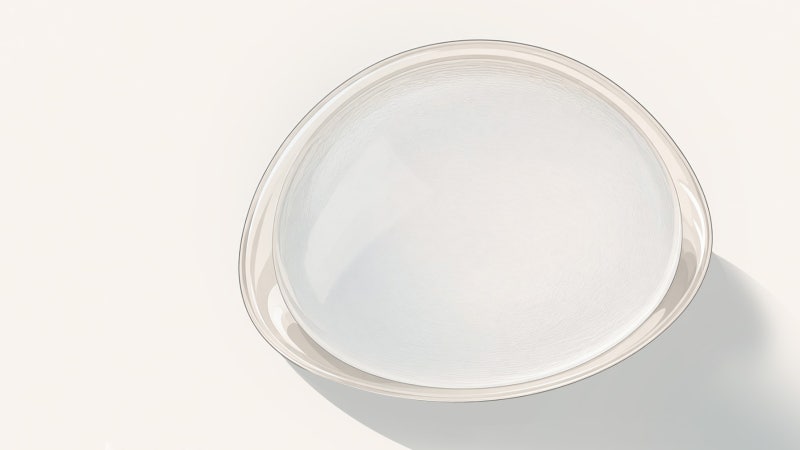
Many people feel even more overwhelmed before breast implant removal than they did before their original surgery.
The reasons for wanting an implant removed vary widely. Some have a ruptured implant or an unflattering shape. Others have a hard, painful breast due to capsular contracture. And some simply want to go without implants and feel unburdened again.
That is why implant removal surgery should be approached differently from the original augmentation.
Why do you want to remove your implants?
The reason also determines how much of the capsule should be removed.
Today, I'll walk you through capsule removal and bleeding control, the questions I'm asked most often.
1. Do You Always Have to Remove the Entire Breast Capsule?
The capsule is a thin membrane that separates the implant, a foreign object, from the rest of your body. It is the body's normal immune response, walling off the implant to isolate it.
If you searched online before having your implants removed, you may have been confused by the conflicting advice you found:
“You must remove 100% of the capsule to avoid health problems.”
“Removing the capsule causes pneumothorax.”
“It’s better to leave it in place for the sake of shape.”
To cut to the chase, capsule removal is not necessary in every case. The joint safety recommendations issued by the International Society of Aesthetic Plastic Surgery (ISAPS) and the American Society for Aesthetic Plastic Surgery (ASAPS) take the same position.
Surgery to remove the entire capsule covers a wider area and takes longer than removing only the implant. The likelihood of complications is also much higher.
2. When Is It Acceptable to Leave the Capsule in Place?
If a thin, soft, healthy capsule is firmly attached to the ribs and chest wall, it may be safer not to peel it off by force.
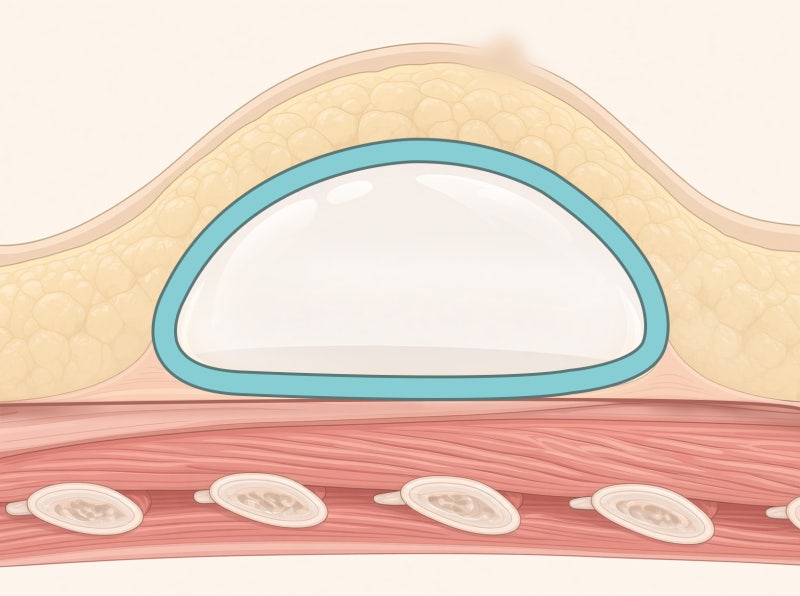
Forcibly peeling the capsule off in this area can, in rare cases, cause a pneumothorax. A pneumothorax is a condition in which air builds up between the membranes that surround the lungs (the pleura).
Large-scale studies report pneumothorax after capsule removal in 0.1% or fewer cases, which makes it rare. Even so, there is no reason to take on risks you don't need to.
Leaving a healthy capsule in place is not a careless approach. It is a deliberate choice made by weighing risks against benefits.
3. When Must the Capsule Be Removed?
First, a ruptured implant does not automatically mean the capsule has to be removed. Even when a silicone implant has ruptured, it is common to thoroughly clean up the leaked gel and leave the capsule as it is.
What determines whether the capsule should be removed is the condition of the capsule itself, not the implant. If the capsule has developed a pathological change, it should be removed. There are three typical cases.
First, when the capsule is linked to cancer. If cancer is confirmed or suspected in the capsule, as in implant-associated lymphoma, the capsule is removed intact, without being broken. This is called “en bloc” removal.
Second, when the capsule has changed over time. After an implant has been in place for many years, calcium can build up in the capsule and cause calcification, making it as hard as stone.
Third, when the capsule has thickened and hardened. A capsule thickened by capsular contracture can remain as firm tissue even after the implant is removed, and it may be palpable or distort the shape of the breast.
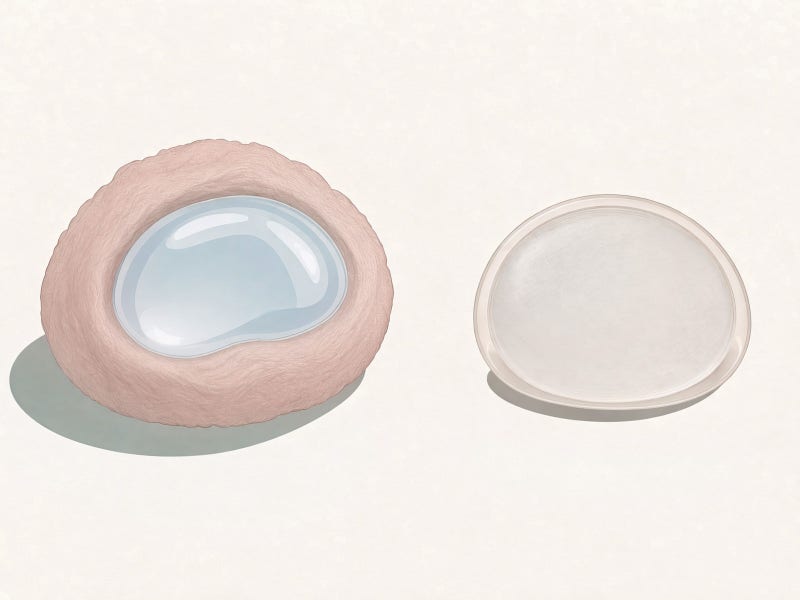
What matters here is precisely removing only the diseased capsule while protecting the healthy tissue around it.
Many people who have had implants for a long time worry, “Has all that time damaged my tissue?”
From my experience performing many capsule and implant removals, tissue often recovers better than people expect, even after years with implants, as long as the implant and capsule are handled properly.
4. Why Is Bleeding Control Important in Implant Removal Surgery?
To complete implant removal cleanly, bleeding during surgery must be kept to a minimum.
The most common major complication after capsule removal is a hematoma, a collection of blood at the surgical site.
Reports show that hematomas occur more often when capsule removal is performed alongside implant removal than when only the implant is removed or replaced.
So how can bleeding be reduced?
The surgeon needs to look directly at the surgical field, dissect the tissue little by little, and stop even small bleeding points as they appear. This takes time and requires a great deal of focus from the surgeon.
Breast implant removal is not a simple procedure that ends once the implant is taken out.
For implant removal surgery, please remember these two points.
1. Capsule removal is not automatic. The extent of removal is determined by the condition of the capsule and the degree of adhesion to the surrounding tissue.
2. Reducing bleeding during surgery brings you closer to precise surgery and a more comfortable recovery.
Please check these points before surgery
- Whether the reason for removal has been confirmed through an examination and imaging tests (ultrasound or MRI)
- The planned extent of capsule removal and the risks involved
- How dissection and hemostasis will be carried out to reduce bleeding
- Whether there is a way to reach the clinic right away if a hematoma is suspected after surgery
A plastic surgeon who focuses on breast surgery should first ask why the implant is being removed, and should be able to explain a capsule management plan that fits that reason.
This post was written directly by Amorata Plastic Surgery to provide accurate medical information, in compliance with Article 56 of the Medical Service Act.
All procedures and surgeries carry the possibility of side effects, ranging from minor to serious, depending on the individual. Please make a careful decision after thoroughly consulting with your medical team.
Frequently Asked Questions
Do you have to remove the entire capsule when removing breast implants?
No, capsule removal is not necessary in every case. The article explains that the extent of removal is determined by the condition of the capsule and the degree of adhesion, and that the joint safety recommendations from ISAPS and ASAPS take the same position.
Can forcibly peeling off the capsule cause a pneumothorax?
Yes, though it is rare. It can occur when a healthy capsule firmly attached to the ribs and chest wall is forcibly peeled away. Large-scale data report that pneumothorax after capsule removal occurs in 0.1% or fewer cases.
If an implant ruptures, does the capsule also have to be removed?
No, a ruptured implant does not automatically mean the capsule must be removed. Even after a silicone implant has ruptured, the leaked gel is often cleaned up and the capsule is left in place. The article explains that the decision depends on the condition of the capsule, not the implant.
When is capsule removal necessary?
Capsule removal is necessary when the capsule itself shows a pathological change. The article cites three typical cases: when cancer is confirmed or suspected in the capsule, when the capsule has changed over time, such as through calcification, and when it has thickened and hardened due to capsular contracture.
Why is bleeding control important in implant removal surgery?
The most common major complication after capsule removal is a hematoma, a collection of blood at the surgical site. Reports show that hematomas occur more often when capsule removal is performed alongside implant removal than when only the implant is removed or replaced. That is why the article stresses minimizing bleeding during surgery.
What should I check before implant removal surgery?
Before surgery, it is a good idea to confirm the reason for removal, the planned extent of capsule removal and its risks, how bleeding will be managed, and how to reach the clinic if a hematoma is suspected after surgery. Check whether the reason for removal has been confirmed through an examination and imaging tests (ultrasound or MRI).