2026-10-03
Subfascial Breast Augmentation in Incheon: Pros, Cons, and Ideal Candidates
Explore the benefits, limitations, and ideal candidates for subfascial breast augmentation, an advanced technique offering less pain, rapid recovery, and natural contours by preserving chest muscles.
When considering breast augmentation in Incheon,
the two things that concern patients the most
are typically postoperative pain
and an unnatural appearance.
Lately, across internet forums and online communities,
"subfascial breast augmentation" is frequently mentioned
as a technique that helps ease these worries.
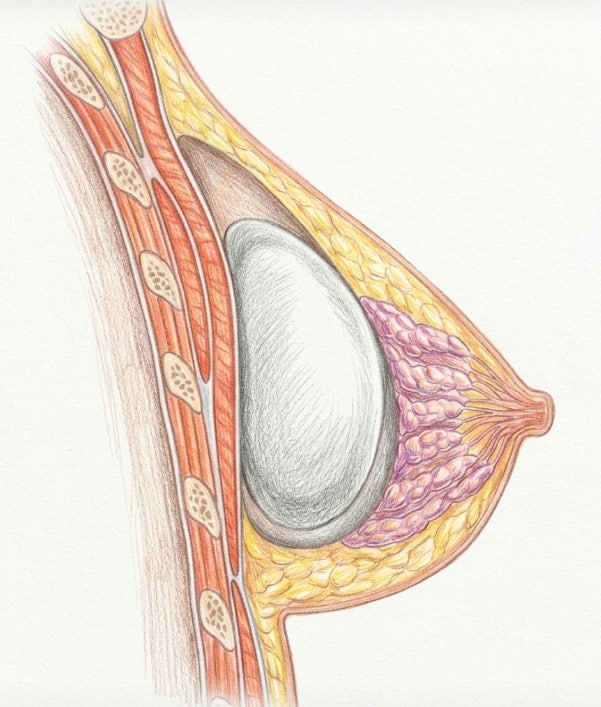
Simply put, subfascial surgery involves
gently lifting the very thin membrane (fascia)
that covers the pectoral muscle (pectoralis major)
and placing the implant beneath it.
Because the muscle itself is preserved
without being cut or damaged,
it differs distinctly from conventional surgical methods.

However, the subfascial approach
is not suitable for everyone.
Let’s explore why this technique has become so popular,
its advantages and disadvantages,
and who the ideal candidates
truly are.
1. Why Is Subfascial Surgery Gaining Popularity? (Pros and Benefits)
The primary reason subfascial surgery has garnered so much attention
is its ability to deliver on both fronts:
exceptional comfort and beautiful contours.
The first tangible benefit patients notice
is significantly reduced pain
and a much faster recovery.
Much of the discomfort following breast surgery
arises from trauma to the muscle.
Because the subfascial approach does not require
cutting or dissecting the muscle layer,
movement is considerably more comfortable post-op,
allowing for a swift return to daily activities.
Another major advantage is the ability
to preserve the implant's innate silhouette.
In the dual-plane method, where the implant is positioned beneath the muscle,
the strong pressure exerted by the pectoral muscle
can sometimes flatten the implant or alter the intended projection.
In contrast, without the muscle's constraining pressure,
the subfascial method allows the smooth, round contours of the implant
to be directly expressed on the surface.
The delicate layer of fascia gracefully blankets the implant,
softening overly harsh edges
while creating a remarkably natural touch and feel.
It is especially effective for addressing breast shape irregularities
or correcting severely constricted (tuberous) breasts.
2. What Are the Drawbacks and Precautions?
Despite its many merits,
no single surgical approach is universal.
There are distinct limitations
that require careful consideration.
The most crucial factor
is the thickness of the patient's existing breast tissue.
Because the implant sits above the muscle
in a relatively superficial layer close to the skin,
patients with very thin tissue or a slender frame
face a higher risk of visible implant rippling
or palpable edges.
Generally, a pinch test of the breast tissue
must yield at least 2 cm to be considered feasible,
and 3 cm or more is recommended
for a safe and aesthetically pleasing result.

Additionally, meticulous post-op management
is required to prevent implant displacement.
Since the thin fascia offers less structural support than the muscle,
inserting an excessively large implant into loose tissue
may cause sagging or shifting
due to the implant's weight.
Consequently, individuals seeking dramatic volume increases
will face limitations in implant size selection.
Until a stable capsule forms to lock the implant firmly in place,
wearing a supportive post-surgical bra consistently
is essential to avoid asymmetry or malposition.
Finally,
the surgical technique itself is demanding.
Dissecting the delicate tissue while preserving its integrity
requires advanced technical skill
and extensive experience from the surgeon.
3. Who Is the Ideal Candidate?
Weighing the pros and cons,
this technique is an excellent choice
for the following individuals:
1) Active Individuals and Fitness Enthusiasts
: Those who practice yoga, Pilates, weight training,
or other sports professionally or recreationally.
Because the pectoralis major muscle remains intact,
muscle mobility is unaffected,
and the sensation of a foreign body is minimized.
2) Patients Needing a Swift Return to Daily Life
: Individuals apprehensive about severe postoperative pain
or those who cannot take extended time off work
or family commitments,
making a rapid recovery essential.
3) Patients Requiring Defined Shape Correction
: Those seeking a clearly defined, enhanced contour
or looking to correct anatomical irregularities
such as tuberous or constricted breasts.
In closing,
the most important takeaway is this:
subfascial surgery is not an automatic, one-size-fits-all solution.
While it preserves muscle function
and creates elegant contours,
it is not universally optimal for every body type.
Whether your breast tissue is thick enough to support the subfascial plane,
as well as your chest wall anatomy and skin elasticity,
are critical variables that must be evaluated.
Ultimately, the key lies not in the surgical technique alone,
but in a thorough 1-on-1 consultation
with an experienced, board-certified plastic surgeon
who carefully assesses your anatomy in person
to tailor the most suitable approach for you.
If you are considering breast augmentation in Incheon,
we encourage you to schedule an in-depth consultation
to discover the safest and most satisfying path forward.
<Related Article>
Amorata Plastic Surgery |
Main Contact: 02-522-0955 3F Square Cube, 28 Seocho-daero 78-gil, Seocho-gu, Seoul |
This post has been authored directly by Amorata Plastic Surgery
in accordance with Article 56 of the Medical Service Act
to provide reliable medical information.
All procedures and surgeries carry potential risks
and side effects that vary by individual;
please consult thoroughly with a medical specialist before proceeding.
Frequently Asked Questions
How does subfascial breast augmentation differ from traditional methods?
Unlike conventional submuscular methods where the pectoralis major muscle is cut, the subfascial approach inserts the implant underneath the thin membrane (fascia) covering the muscle. Because the muscle is preserved, it results in substantially less pain and a much faster recovery period.
Can lean or thin individuals undergo subfascial breast augmentation?
Eligibility depends on the thickness of the patient's existing skin and breast tissue. Because the implant is placed in a relatively superficial layer, a pinch test of at least 2 cm of tissue is necessary. A thickness of 3 cm or more is recommended to prevent implant visibility or palpability and ensure natural results.
Who is the ideal candidate for subfascial breast surgery?
It is particularly well-suited for active individuals who regularly exercise, as well as those who need a swift return to daily responsibilities due to work or childcare. It is also an effective approach for correcting constricted or tuberous breasts.
Is there a risk of implant displacement after subfascial surgery?
Yes. If post-op care is neglected or if an overly large implant is chosen, displacement or sagging can occur since the thin fascia offers less structural support than muscle tissue. Wearing a dedicated post-surgical supportive bra consistently until the capsule stabilizes is crucial for optimal results.