2026-09-28
Remembering Dr. Sydney Coleman: The Surgeon Who Set the Standard for Fat Grafting
A tribute to Dr. Sydney Coleman, the American plastic surgeon who pioneered Structural Fat Grafting and transformed fat transfer into a predictable, regenerative procedure.

American plastic surgeon Dr. Sydney R. Coleman
passed away in September 2026 at the age of 71.
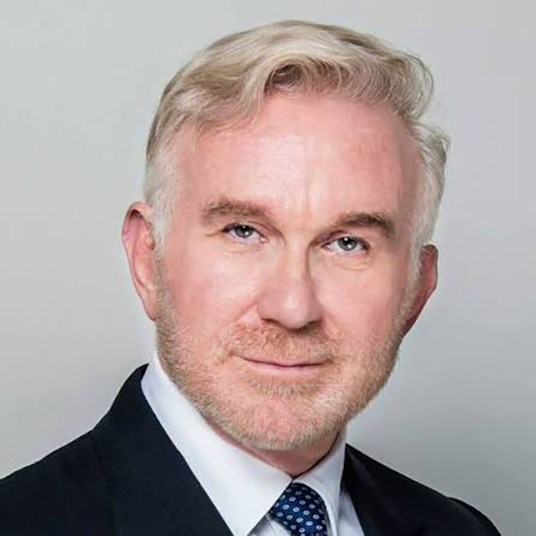
Dr. Coleman transformed fat grafting from a procedure meant merely to "fill empty spaces" into a surgery that "builds structure."
Many of the fundamental principles utilized today in facial and breast fat grafting stem directly from his technique.
Who was Sydney Coleman?
He was a board-certified plastic surgeon who established his private practice in New York in 1985.
He began researching fat grafting in 1987 and was an active faculty member at NYU Langone Medical Center.
He served as president of the International Federation for Adipose Therapeutics and Science (IFATS) and the International Society of Plastic Regenerative Surgery (ISPRES).
In 2022, the American Society of Plastic Surgeons (ASPS) honored him with a Special Achievement Award.
What set the Coleman Technique apart?
Previously, fat grafting often involved injecting large boluses of harvested fat all at once.
Much of the injected fat was either reabsorbed or formed clumps, making outcomes notoriously unpredictable.
Dr. Coleman standardized the three key stages: harvesting, purification, and placement.
Harvesting is performed gently using low negative pressure to preserve the integrity of the fat tissue.
Purification utilizes centrifugation to separate viable fat cells from oil and fluids.
Placement involves injecting tiny droplets across multiple anatomical planes.
He termed this method "Structural Fat Grafting."
A Surgeon Who Viewed Fat as a "Regenerative Tissue"
Dr. Coleman observed that skin texture improved visibly where fat had been grafted.
Consequently, he came to view fat not merely as an inert filler material, but as an active organ capable of tissue regeneration and healing.
This pioneering perspective paved the way for adipose-derived stem cell (ADSC) and regenerative medicine research.
He also participated in Department of Defense-funded clinical trials for limb reconstruction alongside researchers from the University of Pittsburgh.
His colleagues remembered him as
someone who swam against strong currents for decades to bring about true innovation.
The core tenets—handling fat gently, injecting it in micro-droplets, and distributing it across multiple tissue layers—
remain the golden rule of fat grafting today.
May he rest in peace.
American plastic surgeon Dr. Sydney Coleman, who established modern standards for fat grafting, passed away in September 2026.
Here is an overview of the principles behind the Coleman Technique and his lasting legacy in breast fat grafting.
Frequently Asked Questions
Who was Sydney Coleman?
He was an American plastic surgeon who established the modern standard for fat grafting. After opening his practice in New York in 1985, he dedicated his career to fat grafting research, served as president of both IFATS and ISPRES, and received the ASPS Special Achievement Award in 2022.
What is the core principle of the Coleman Technique (Structural Fat Grafting)?
It systematically standardizes three steps: harvesting, purification, and placement. By harvesting fat gently at low pressures, centrifuging it to separate oil and fluids, and micro-injecting minute droplets across multiple planes, it significantly improves graft survival rates and safety.
How does the Coleman Technique differ from previous fat grafting methods?
It overcame the clumping and high reabsorption rates associated with earlier techniques that injected large boluses of fat at once. While older methods yielded unpredictable outcomes, Coleman's approach distributes small amounts evenly across layers, producing stable and predictable results.
How did Dr. Coleman view adipose tissue?
He saw fat not as a simple volume-filling substance, but as a regenerative tissue capable of repairing and rejuvenating tissue. Observing improvements in skin texture after grafting, he broadened the field's perspective toward adipose stem cells and regenerative medicine.