2026-11-18
Can You Really Breastfeed After Breast Surgery? <Expert Answer>
Breastfeeding after breast surgery is possible in most cases. Implants sit behind the milk-producing tissue, but the incision site and surgical extent can affect milk supply.

Review: everyone, including the doctor, was kind and explained in detail; Director Han Seung-beom provides thorough aftercare.
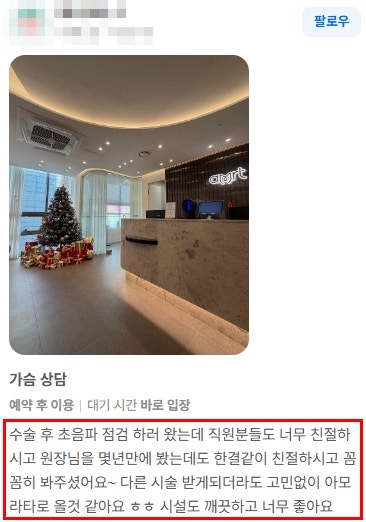
Review with a lobby photo: came for a post-op ultrasound check; staff and the director were kind and thorough, and the facilities are clean.
Review: nearly 10 years after surgery, the clinic still checks thoroughly and kindly; friendly staff, clean building, highly recommended.
Review: satisfied from consultation to aftercare, with thorough explanations and kind staff. Recommended for those considering breast surgery.
“Will I be able to breastfeed if I have a baby later?”
To those considering breast surgery,
this is a question I hear more often than you might think.
People who ask this question
are usually in one of two situations.
One is someone who is planning to get married or have a baby soon,
but doesn't want to put off dealing with their breast concerns any longer.
The other has already been through pregnancy and breastfeeding
and is now considering surgery because of how their breasts have changed.
Even though the situations differ, the worries are probably similar.
“What if it harms my baby?”
“What if breastfeeding ruins the results of my surgery?”
It can be hard to make a choice for your own body
when you worry it might affect your child,
so it's not easy to decide.
Hello.
I am Dr. Han Seung-beom, CEO and Head Physician at Amorata Plastic Surgery.
Today, as a surgeon who has performed only breast surgery
for 20 years, I'll personally walk you through
some helpful information about these concerns.
As you read, think about where you are right now
and see how it may help you.
1. If you plan to breastfeed, decide this before surgery
“Can't I breastfeed at all after surgery?”
In most cases, you can.
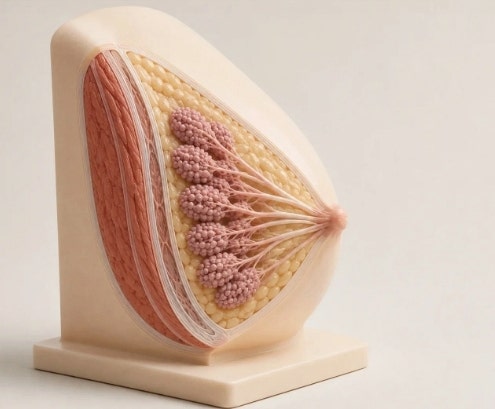
Breast milk is produced in the glandular tissue
deep inside the breast, then travels
through channels called milk ducts
and exits through the nipple.
In breast augmentation, implants
are usually placed behind this glandular tissue,
that is, beneath the gland or under the chest muscle.
The implant doesn't replace or block the structures
that make and release milk.
Rather, it sits behind them.
So having surgery
doesn't automatically make breastfeeding impossible.
That said, there's one distinction you should keep in mind.
Whether you can breastfeed
and whether you produce enough milk
are two different issues.
For milk production to work well,
the milk ducts need to stay open and connected,
and the sensory nerves in the nipple and areola
that carry stimulation to the brain when a baby nurses
also need to stay intact.
This stimulation has to get through,
because it triggers the release of the hormones
that help the body make milk.
So depending on the surgical technique,
there can be differences.
Incisions made around the areola
are close to the milk ducts and the nerves near the areola,
so they are known to carry a relatively higher chance
of affecting milk supply.
Incisions in the armpit or along the crease under the breast
generally don't pass directly through this area.
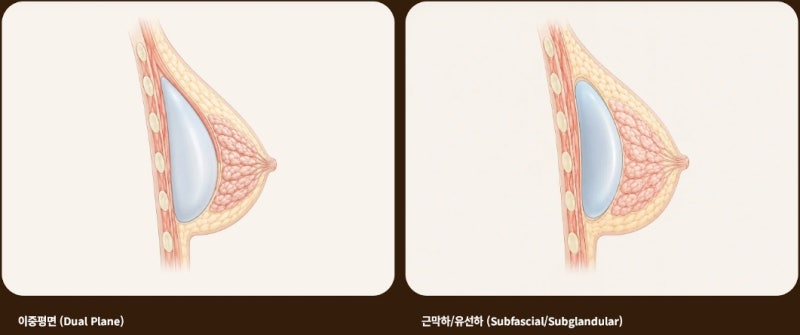
Implant placement matters too.
When an implant is placed under the muscle,
it sits one layer away from the glandular tissue.
When it's placed directly beneath the gland,
it comes into closer contact with the gland.
Also, unlike procedures that only augment the breasts,
procedures that also correct sagging or reduce size
can involve a wider area of the milk ducts and nerves.
So if you plan to breastfeed in the future,
please mention this during your consultation first.
Even if you aim for the same result,
the surgery can be planned to protect the milk ducts and nerves as much as possible.
2. If you already have implants, here's how to think about it

“Could implant materials mix into breast milk?”
This is the concern many people worry about most.
It's understandable to feel anxious
about whether silicone from the implant could flow into breast milk
and reach the baby.
On this point,
a study comparing silicon levels in breast milk
between mothers with implants and mothers without them
reported no meaningful difference.
In fact, higher levels were measured
in commercial milk and infant formula.
That's because silicon is naturally present
in the food and water we consume.
Based on current evidence,
the data does not support avoiding breastfeeding
just because you have implants.
“Could the implant be damaged while breastfeeding?”
During breastfeeding, the breasts repeatedly fill and empty,
so their size changes.
Implants are designed to withstand this level of volume change
and the pressure of a baby nursing,
so normal breastfeeding is unlikely to cause rupture or damage.
However, you should check these signs right away.
During breastfeeding, milk ducts can become blocked
or mastitis can develop.
These are common problems for breastfeeding mothers,
even those without implants.
If you have implants, though,
it's best to check for inflammation sooner.
When one breast is noticeably swollen and red |
When you have a fever, or the breast feels hot and painful to the touch |
When your breast feels firmer than usual or changes shape |
If you notice any of these symptoms,
don't wait it out. See a doctor right away.
Catching inflammation early
helps prevent it from spreading around the implant.
In conclusion, breastfeeding after breast surgery
is possible in most cases.
Implants sit behind the tissue that makes milk,
and based on current data,
implants do not appear to make breast milk harmful for babies.
However, whether you produce enough milk
depends on the incision location and the extent of surgery,
and it can vary.
So if you plan to breastfeed,
be sure to bring it up at your pre-surgery consultation.
If you've already finished breastfeeding,
it's best to wait until your breasts have settled,
then consider volume and sagging together
before deciding on a plan.
Making a choice for your own body and caring for your child,
there are plenty of ways to take care of both.
<Helpful Related Article>
Amorata Plastic Surgery |
Main Phone: 02-522-0955 28, Seorodae-ro 78-gil, Seocho-gu, Seoul, Square Cube, 3rd Floor |
This post was written directly by Amorata Plastic Surgery
to provide accurate medical information,
in compliance with Article 56 of the Medical Service Act.
Every procedure and surgery can carry side effects,
both minor and major, that vary from person to person.
Please make a careful decision after thorough consultation with your medical team.
Frequently Asked Questions
Can't I breastfeed at all after breast surgery?
In most cases, breastfeeding is still possible after surgery. Implants are usually placed behind the glandular tissue that produces milk, that is, beneath the gland or under the chest muscle, so having surgery alone does not make breastfeeding impossible.
Can the surgical technique affect milk supply?
Yes, it can. Incisions made around the areola are known to carry a relatively higher risk of affecting milk supply because they are close to the milk ducts and the nerves near the areola. Incisions in the armpit or along the crease under the breast generally do not pass directly through this area.
Does silicone from implants get into breast milk?
Based on current evidence, there is no strong reason to avoid breastfeeding simply because you have implants. A study comparing silicon levels in breast milk between mothers with and without implants reported no meaningful difference. Silicon is also a naturally occurring component found in food and water.
Can implants be damaged during breastfeeding?
Normal breastfeeding is unlikely to cause an implant to rupture or be damaged. Implants are designed to withstand the volume changes that occur as the breasts fill and empty during breastfeeding, as well as the pressure of a baby nursing.
Which symptoms during breastfeeding mean I should see a doctor right away?
If one breast becomes noticeably swollen and red, you develop a fever, the breast feels hot and painful when touched, or it becomes firmer than usual or changes shape, don't wait it out. See a doctor right away. If you have implants, it's best to check for inflammation sooner, since catching it early helps prevent it from spreading around the implant.
If I plan to breastfeed, what should I do before surgery?
Be sure to mention your breastfeeding plans at your pre-surgery consultation. Even if you aim for the same result, the surgery can be planned to protect the milk ducts and nerves as much as possible. If you have already finished breastfeeding, it's best to wait until your breasts have settled, then decide on a plan by considering volume and sagging together.