2026-10-05
Breast Implants or Fat Grafting? How to Choose the Right Option
Compares breast implants and autologous fat grafting, covering how each works, who each suits, hybrid options, and post-surgery care for natural results.
“My clothes don’t fit well and it really stresses me out, but I don’t want it to look like I’ve had surgery.” “I want to go up in size, but I have too much stubborn fat on my body, and I’m worried about it.”
If you look at what people who’ve decided to get breast surgery really feel,
it becomes clear that they want more than just bigger breasts. Each person has their own distinct insecurities and needs.
That’s why the first crossroads most people face is choosing between ‘implants’ and ‘autologous fat grafting.’
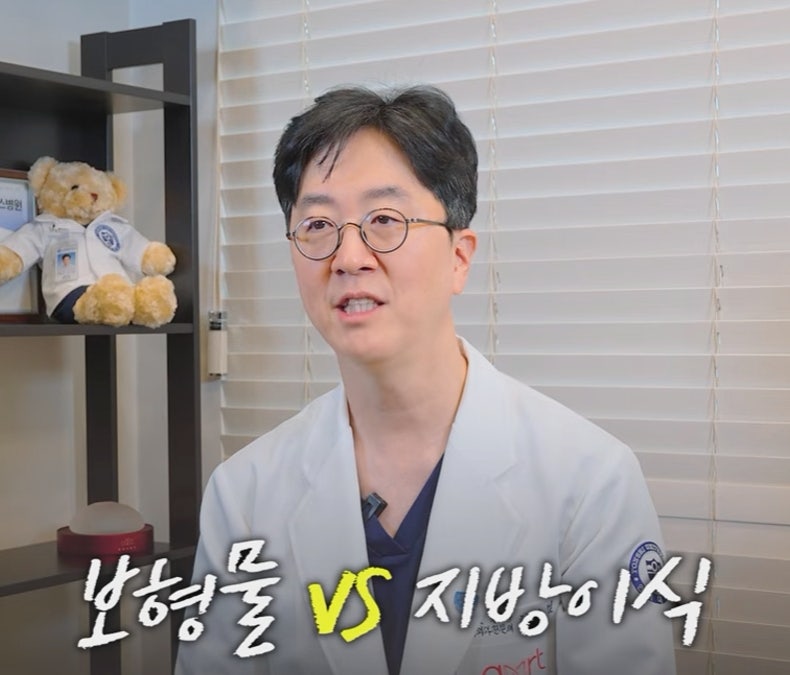
Both procedures aim to add volume to the breast, but their mechanisms, results, and pros and cons are strikingly different.
That’s why it’s better to first understand how each procedure actually changes your body, rather than getting swept up in other people’s reviews. Today, I’ll explain each one in detail.
<Over 1,000 breast surgery reviews on Babitalk/Gangnam Unni>
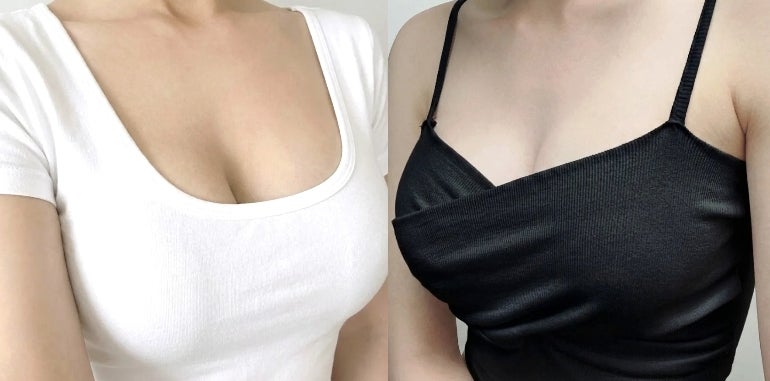
1. Implants vs. Autologous Fat Grafting: What Are the Selection Criteria and Rationale?
To choose the option that fits you best, you need to clearly understand the characteristics and limitations of each procedure.
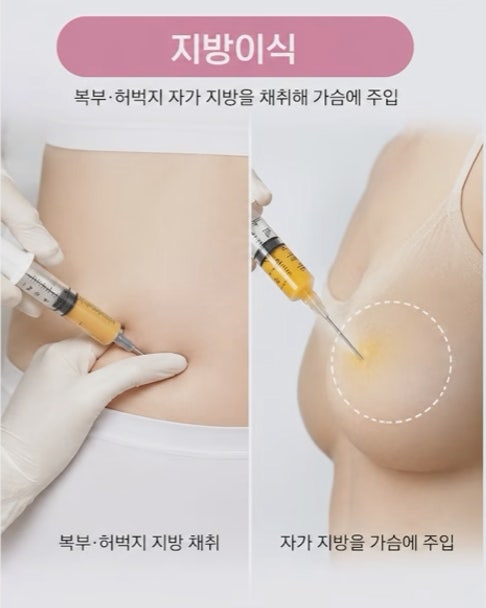
1) If a natural result that truly feels like your own tissue is your top priority? : Autologous fat grafting
Autologous fat grafting works by harvesting excess fat that has built up in areas such as the abdomen or thighs and transplanting it into the breasts.
[Recommended For]
Those seeking a natural volume increase of about A-cup to B-cup |
Those with enough spare fat to harvest |
Those who are strongly averse to surgical scars |
Because this method uses 100% of your own cells rather than artificial materials, the touch and movement of the breasts feel as natural as your original breasts.
It also uses a thin, syringe-like cannula, so it leaves no noticeable incision scars. That is a major advantage.
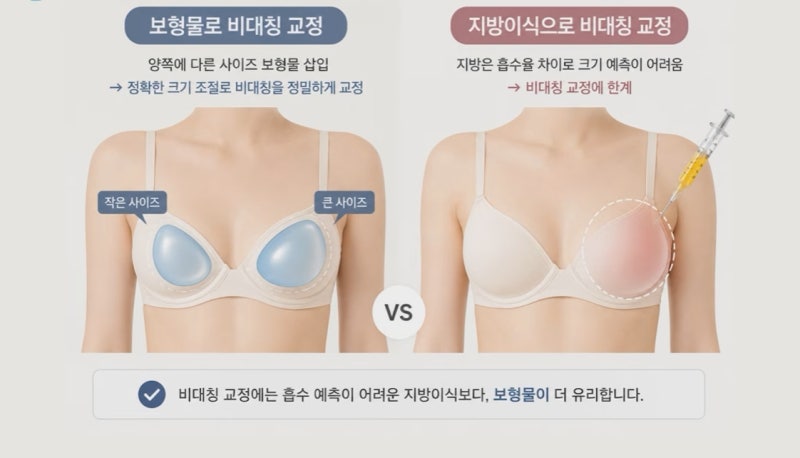
There are some things to keep in mind, however. Not all of the transplanted cells survive. Roughly 30–50% are reabsorbed by the body during metabolic processes. For this reason, there are physical limits to precisely predicting and growing to a size like a C or D cup. In rare cases, fat that fails to engraft may also clump together or develop microcalcifications.
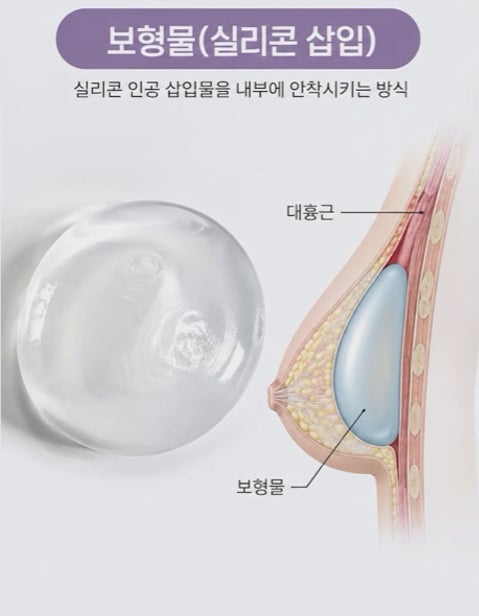
2) If your goal is a definite change in volume? : Implants
Breast implants, which most people are familiar with, involve placing silicone implants beneath the breast tissue to create volume directly.
[Recommended For]
Those seeking a definite, dramatic volume increase, from an A-cup to a C–D cup or larger |
Those with a significant size difference (asymmetry) between the two breasts |
Because implants come in set volumes (cc) and shapes, you can achieve your exact desired size and shape with precision through consultation with your medical team before surgery.
In particular, in cases of severe asymmetry, the implant on each side can be sized differently to physically correct the imbalance in a meticulous way. That is a real advantage.
Can you get the best of both? (Hybrid breast augmentation)
These days, rather than insisting on one option in black-and-white terms, many surgeons use a method in which an implant forms a solid framework for volume, and a thin layer of your own fat is grafted over it or around the cleavage area.
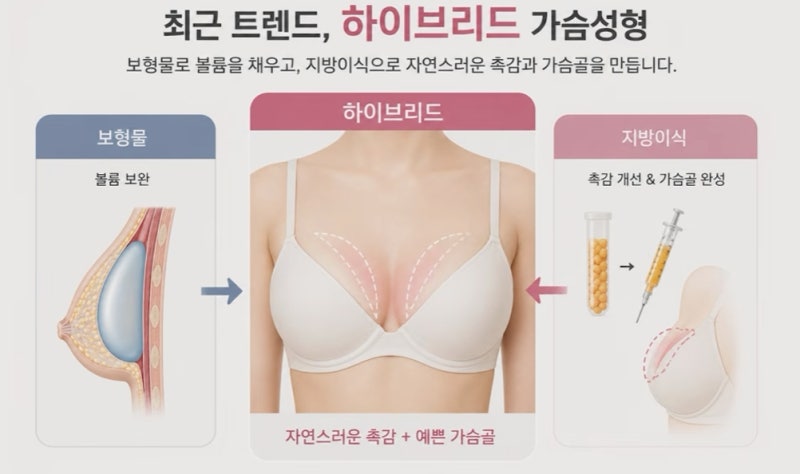
This approach is called ‘hybrid breast surgery.’ Your own fat conceals any unnatural feel the implant might have, creating a synergistic effect: you increase size with the implant while softening the feel with your own fat.
2. Post-surgery care can make a difference in your results.
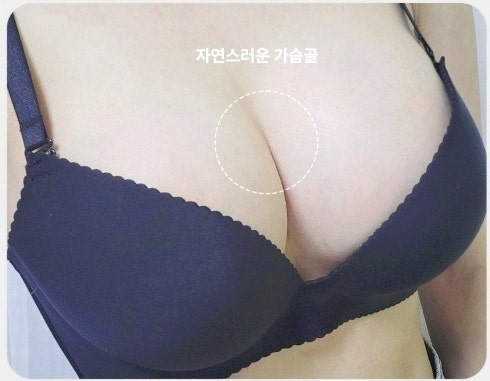
From the moment you leave the operating room, the shape and feel of your breasts are shaped by how you care for them. Just as the procedures work differently, the recovery methods are almost the opposite.
1) Post-care for implants: ‘Securing position and maintaining space’
The key is for the implant to settle neatly into its intended position inside your body. In the early stages, you need to secure it firmly with a compression garment or supportive bra so it doesn’t shift up or down. Because a foreign object has been placed in the body, you should also take preventive medication to avoid capsular contracture, an excessive defensive response that hardens the tissue around the implant. Focus on keeping the skin around the scar soft and supple.

2) Post-care for fat grafting: ‘Complete rest and nutritional support’
After fat grafting, the most important word is ‘engraftment rate.’ For the newly transplanted fat cells to connect with surrounding blood vessels and take root, complete stability is essential. Pressing on the breasts or massaging them too hard can crush the fat cells or cause them to be absorbed.
Similarly, if you diet or do intense cardio that makes you sweat heavily, your body may burn the fat transplanted into your breasts first to meet its energy needs. In the early stages, adequate nutrition and rest are essential.
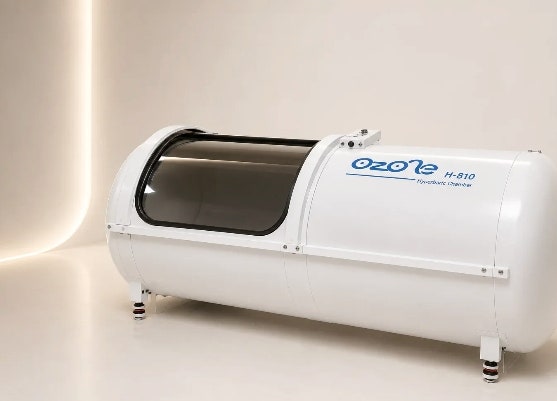
Q. Is there a premium care option that helps both procedures?
Many clinics now offer a shared care option for both procedures: hyperbaric oxygen therapy, in which you breathe highly concentrated oxygen inside a capsule.
Hyperbaric oxygen therapy dissolves a large amount of oxygen into the blood and delivers it all the way to the capillaries in the surgical area.
For implant patients, it helps reduce swelling and bruising quickly, speeding up the return to daily life. For fat grafting patients, it supplies oxygen and nutrients smoothly to the cells, acting as a reliable ally that can dramatically boost the engraftment rate.

In the end, there is no single answer in breast surgery that says, “This method is the best, period.” For those who fear scarring and value a natural look, fat grafting may be the best choice. For those who want a striking, full look, implants may be the only solution.
What matters most is accurately assessing your own physical conditions, such as your current chest wall size, how much your skin has stretched, and how much spare fat you have available for harvesting. Treat the countless online resources as a reference only, and visit a clinic in person for a body analysis.
Only when you consult a specialist who can carefully assess the characteristics of your body and propose a clear surgical plan tailored to you can you achieve the safest and most satisfying results.
<Related Column You May Find Helpful>
Amora Taps Plastic Surgery |
Main Phone: 02-522-0955 28, Seorodae-ro 78-gil, Seocho-gu, Seoul, Square Cube Building, 3rd Floor |
This post was written directly by Amora Taps Plastic Surgery Clinic, in compliance with Article 56 of the Medical Service Act, for the purpose of providing accurate medical information.
All procedures and surgeries may cause side effects, both minor and serious, depending on the individual. Please make a careful decision after thorough consultation with your medical team.
Frequently Asked Questions
What is the biggest difference between implants and autologous fat grafting?
Both procedures aim to add breast volume, but they work on different principles. Implants involve placing silicone implants beneath the breast tissue, whereas autologous fat grafting transfers fat harvested from areas such as the abdomen or thighs.
Can fat grafting increase breast size to a C or D cup?
The article explains that there are physical limits to enlarging breasts to a C or D cup with fat grafting. About 30–50% of transplanted fat is reabsorbed during metabolism, and there is also a rare possibility of fat clumping or microcalcifications.
Can implants correct the size difference between the two breasts?
Yes. For significant breast asymmetry, the implants on each side can be sized differently to correct the imbalance. Because implants come in set volumes and shapes, you can plan your desired size and shape through a pre-surgery consultation.
What is hybrid breast augmentation?
A common method is to establish a basic volume with an implant, then graft a thin layer of your own fat over it or around the cleavage area. The article explains that your own fat can conceal the implant’s unnatural feel, making the texture softer.
How does post-surgery care differ between the two methods?
For implants, the key is fixing position and maintaining space; for fat grafting, it’s complete rest and nutritional support. Implant patients are advised to wear compression garments or supportive bras to prevent shifting and to take medication to prevent capsular contracture. Fat grafting patients should avoid pressing or vigorously massaging the breasts, as well as diets and intense cardio that cause heavy sweating.
Does autologous fat grafting leave surgical scars?
Autologous fat grafting is noted for not leaving noticeable incision scars, because it uses a thin cannula similar to a syringe. However, side effects vary from person to person, so it’s best to consult thoroughly with your medical team before deciding.