2026-10-23
Breast Fat Grafting Reviews: Why Graft Survival Rate Deserves Close Attention
Explains who may benefit from breast fat grafting, why graft survival rate matters when reading reviews, and how it can be improved, including the role of hyperbaric oxygen therapy.
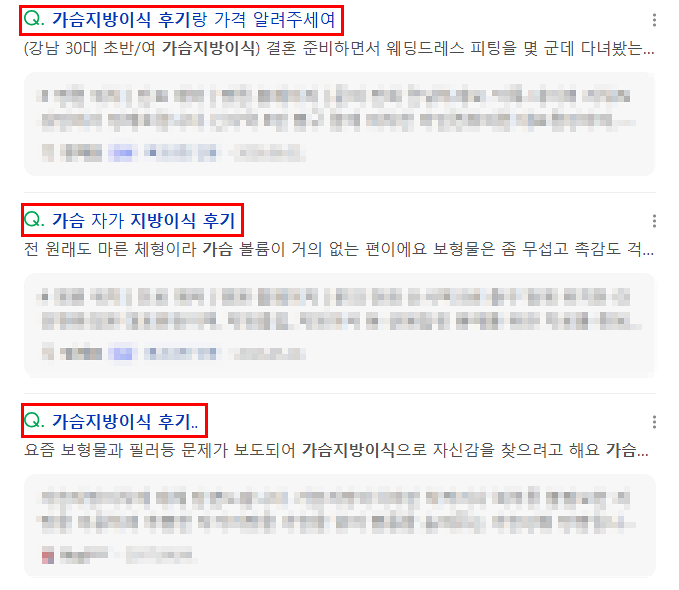
"Will the results really go unnoticed after fat grafting?" "I heard it all gets absorbed and disappears in the end..."
If you're looking through breast fat grafting reviews, these questions probably keep piling up one after another.
In fact, the reason people read reviews is usually less about "how fat grafting works" and more about "could I end up looking like that too?"
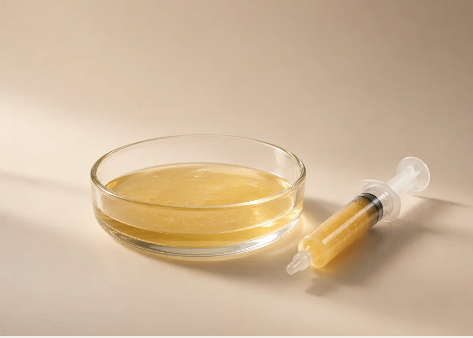
To be honest, fat grafting does not automatically produce a natural-looking result, and there is no guarantee you'll end up looking like the photos in reviews. Even with the same technique, results can differ significantly from person to person. The key factor behind that difference is the "graft survival rate."
Today, I'll explain who this method suits best, why you should pay close attention to graft survival rate when reading reviews, and what it takes to improve it.
1. Before reading reviews, first check whether this method is right for you.
Most reviews tend to show only satisfying outcomes.
Even though fat grafting uses your own body fat, it isn't the right answer for everyone. Let me start by being upfront about its limitations.
"It's difficult to create large volume the way implants can."
Implants maintain their volume according to their set size, but fat is made up of living cells, so not all of the injected fat remains.
At this point, many people think, "Wouldn't more injected fat mean more fat that stays?" Actually, it's the opposite. If too much fat is injected at once, the fat cells clump together, and oxygen and nutrients cannot reach the inner areas. Fat that doesn't survive can turn into hard lumps or lead to calcification.
So who can actually benefit from this method?
First, it's for those concerned about breast asymmetry. Everyone's breasts differ slightly, but if the difference is noticeable, the smaller side can be given just the amount of volume needed to restore balance. Implants must be chosen in fixed size increments, whereas fat allows you to precisely control how much is placed in the desired area.
Second, it's for those who want to refine the shape rather than make a dramatic change in volume. When the upper breast looks hollow or the cleavage line appears empty, partial enhancement like this can produce a natural-looking result.
However, the method can't be chosen based on the desired result alone. Breast shape, skin condition, the amount of glandular tissue, and whether there is enough fat to transfer all need to be evaluated comprehensively before a decision is made.
2. Why graft survival rate is essential to check in reviews
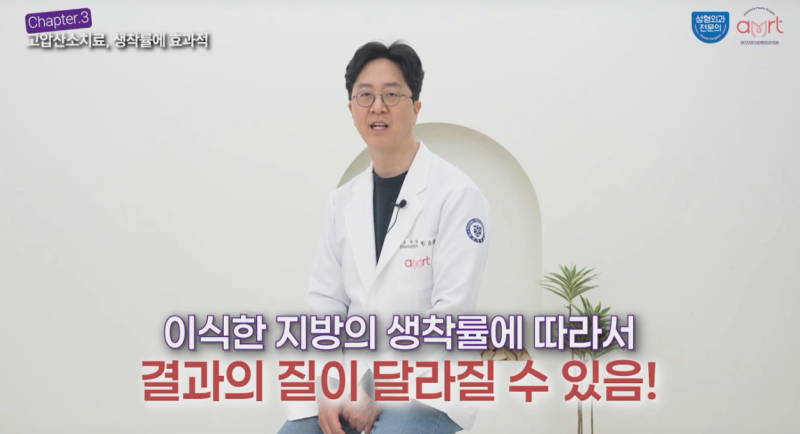
The outcome of this method is determined not by "how much was injected," but by "how much survived."
This survival rate is called the "graft survival rate."
"The first few days are the most critical."
When fat is harvested and transferred to the breast, its cells are cut off from the blood vessels they were originally connected to. It takes time for blood vessels to reconnect in the new location. During that period, the fat cells have to survive on oxygen and nutrients seeping in from the surrounding tissue.
It's a bit like moving into a new home before the water and electricity are connected and having to get by on emergency supplies.
Cells that can't endure this period are eventually absorbed and disappear. That's why individual differences can be so large.
In general, a considerable portion of the transferred fat is known to be absorbed. How much remains varies greatly depending on factors such as body type, smoking status, and blood circulation in the area receiving the graft. For example, people whose bodies don't easily gain weight may have a relatively lower graft survival rate.
That's why the timing of a review matters. Right after surgery, swelling and fat that hasn't yet been absorbed make the volume look larger than it actually is. Over the following months, the fat that will be absorbed disappears, and only the fat that has successfully taken hold remains.
For this reason, photos taken right after surgery or within one or two months can hardly be considered the final result.
When reading reviews, be sure to check whether they include changes from at least three months after surgery.
3. Graft survival rate: there are ways to improve it
Body type can't be changed, but body type isn't the only factor that affects graft survival rate. It can vary depending on how the fat is handled and how it is injected.
Filtering out impurities and damaged cells and transferring only healthy fat can influence graft survival.
Also, rather than injecting everything in one spot, it's better to distribute the fat in thin layers across several areas. This increases the surface area where each cell contacts the surrounding tissue, allowing it to receive oxygen and nutrients more efficiently.
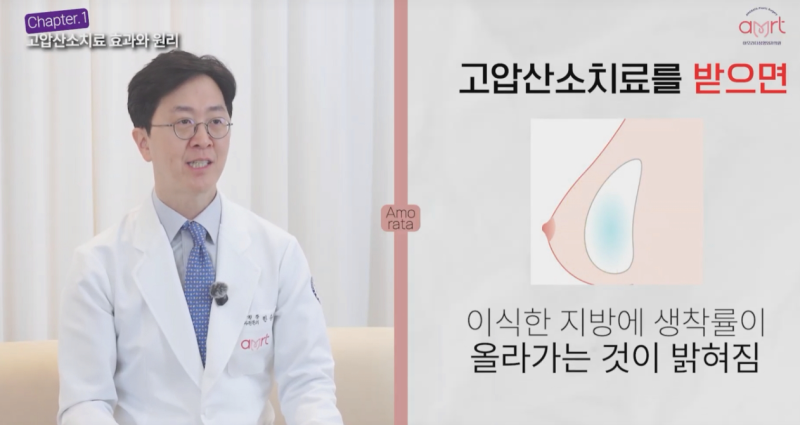
Q. Hyperbaric oxygen therapy to support oxygen supply?
Earlier, I mentioned that transferred fat has to endure oxygen shortage until blood vessels connect to it, right?
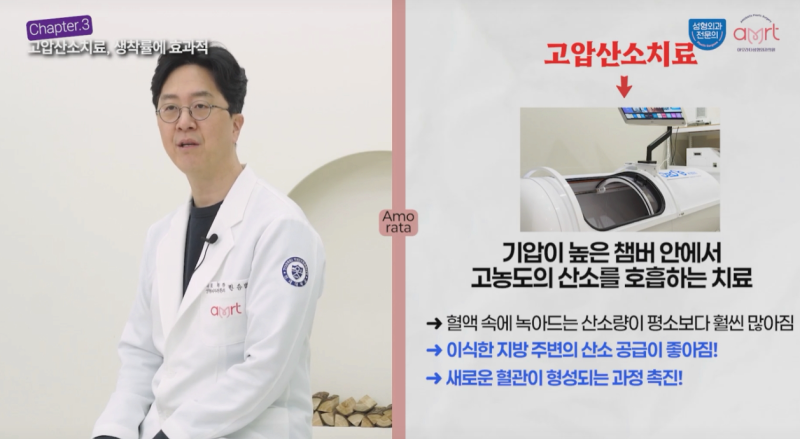
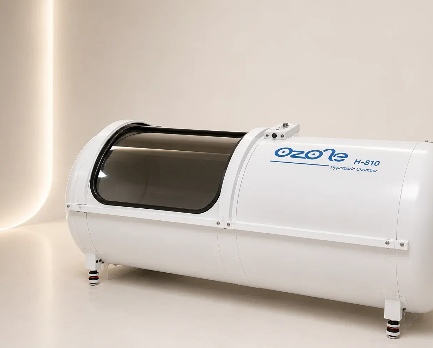
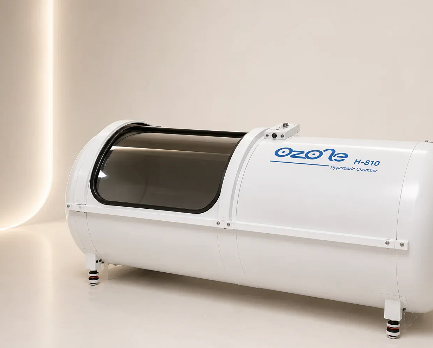
Hyperbaric oxygen therapy (HBOT) is a method that supports oxygen supply during this period. It involves breathing highly concentrated oxygen at a pressure higher than atmospheric pressure inside a sealed chamber.
Here's a simple explanation of how it works. Most of the oxygen we normally breathe is carried by red blood cells and travels through the bloodstream. However, around the transferred fat, blood vessels haven't yet connected properly, so red blood cells have difficulty delivering oxygen.
When the pressure is increased, oxygen dissolves not only into red blood cells but also into plasma, the liquid component of blood. It's a principle similar to how much more carbon dioxide dissolves into a tightly capped carbonated drink. Oxygen dissolved in plasma can seep into narrow gaps that red blood cells can't easily reach, which helps deliver oxygen to transferred tissue where blood vessels have not yet connected.
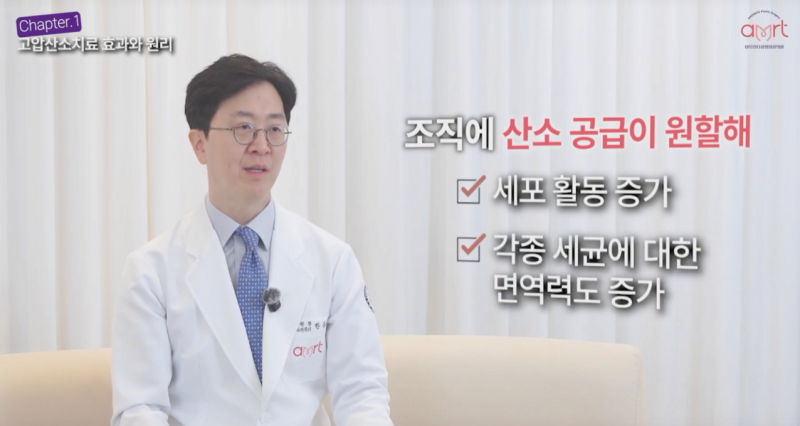
It can also be expected to reduce swelling. When oxygen levels are sufficient, blood vessels that have widened from swelling constrict to an appropriate degree, and less fluid leaks into the surrounding tissue. When swelling subsides faster, the healing environment improves, which can have a positive effect on how well the transferred fat settles in.
That said, it's more accurate to understand hyperbaric oxygen therapy as a supportive method that creates a favorable environment for graft survival, rather than a treatment that guarantees it.
I hope today's discussion has been helpful for anyone looking into breast fat grafting reviews. That concludes this post.
This has been Han Seung-beom, Director and Head Surgeon of Amorata Plastic Surgery Clinic.
Thank you.
<Related Columns You May Find Helpful>
Amorata Plastic Surgery Clinic |
Main phone: 02-522-0955 28 Seoro-daero 78-gil, Seocho-gu, Seoul, Square Cube, 3rd Floor |
This post was written directly by Amorata Plastic Surgery Clinic, in compliance with Article 56 of the Medical Service Act, for the purpose of providing accurate medical information.
All procedures and surgeries may cause side effects of varying degrees depending on the individual, so please consult thoroughly with your medical team and make a careful decision.
Frequently Asked Questions
Who can benefit from breast fat grafting?
It may help those who are concerned about breast asymmetry or who want to refine the shape rather than achieve a dramatic increase in volume. However, the decision should be made after comprehensively evaluating breast shape, skin condition, the amount of glandular tissue, and whether there is enough fat available for transfer.
Does all of the transferred fat stay?
No. A considerable portion of transferred fat is known to be absorbed. The amount that remains varies greatly depending on body type, smoking status, and blood circulation in the area receiving the graft.
At what point should I look at breast fat grafting reviews?
It's best to check changes taken at least three months after surgery or later. Photos taken right after surgery or within one or two months may make the volume look larger than it really is due to swelling and fat that hasn't yet been absorbed, so they are hard to consider final results.
What is graft survival rate in breast fat grafting?
It refers to the percentage of transferred fat that survives. The outcome of fat grafting is determined not by how much fat was injected, but by how much of it survived.
How can graft survival rate be improved?
Selecting only healthy fat for transfer and injecting it in thin layers across multiple areas can influence graft survival. Filtering out impurities and damaged cells before transfer is also mentioned. Thin layers increase the surface area where each cell contacts surrounding tissue, allowing it to receive oxygen and nutrients more effectively.
Does hyperbaric oxygen therapy guarantee graft survival?
No. It's more accurate to understand it as a supportive method that creates a favorable environment for graft survival, rather than a treatment that guarantees it. It involves breathing highly concentrated oxygen at above-atmospheric pressure in a sealed chamber, and it is also described as having the potential to reduce swelling.